
Give It Three

I’ve been thinking about patterns lately.
Not patterns like the wallpaper in your grandma’s bathroom that nobody has had the courage to replace since 1987.
Brain patterns.

Thought patterns. Behavior patterns. Choice patterns. Habit patterns.
The little things we think, say, choose, and do over and over again until somewhere along the way, we stop realizing there’s a pattern at all.
We just think, That’s how I am.
I’m not a morning person.
I procrastinate.
I hate confrontation.
I’m terrible with money.
I could never do that.
I always quit things.
I’m not disciplined.
That’s just how my brain works.
But lately I’ve started wondering...
Is it?
Or is that just the pattern my brain has gotten really good at?
Because there’s actual neuroscience behind this.
When we first learn something or make a new choice, our brain has to pay attention. But with repetition, behaviors can start being grouped together into what neuroscientists call “chunks.” Instead of treating every little step as a brand-new decision, the brain gets more efficient at running a familiar sequence.
Research on habit learning has shown that circuits involving the basal ganglia, particularly the striatum, play an important role in that process.
Ohhh how I love science! Sorry for getting technical there... stay with me.
Basically, our brains are really good at going:
Oh, we do this all the time? Cool. I’ll save that setting.
Which makes perfect sense if you’ve ever learned to ride a horse.
When somebody first starts riding, I swear they have 47 things happening in their brain at once.
Heels down. Hands quiet. Sit up. Look ahead. Leg on. Shorten your reins. Where is my other stirrup? Why is the horse going over there?
HOW DID WE GET OVER HERE?
But eventually, you don’t consciously think through every single piece.
You feel the horse drop a shoulder and adjust your seat. Your hands respond. Your leg moves. You feel something change underneath you before you could necessarily even explain what changed.
You just ride.
Somewhere along the way, dozens of individual decisions started working together as a familiar pattern.
That’s incredibly useful.
It’s how we get better at things.
It’s also where my brain took this entire concept somewhere else.
Because riding isn’t the only thing I practice.
What if I’ve also practiced this:
Something feels difficult.
I can’t do this.
I stop.
Or:
Something feels uncomfortable.
I avoid it.
Immediate relief.
Or:
Something doesn’t work the first way I imagined it.
Well, I guess this isn’t going to work.
Door closed.
How many times can I repeat those responses before they become familiar too?
That’s the part that got me.
Because maybe the door isn’t a separate problem at all.
Maybe sometimes the door is part of the pattern.
An opportunity comes up.
I don’t have time.
Door.
I think about trying something new.
I wouldn’t even know where to start.
Door.
There’s something I really want to do.
I can’t afford that.
Door.
Someone suggests I go after something bigger.
I’m not qualified.
Door.
Thought. Choice. Behavior. Repeat.
Thought. Choice. Behavior. Repeat.
Eventually, maybe I don’t even stop to examine the thought anymore.
I just know:
This is what I do here.
And sometimes those doors are absolutely real.
There are only 24 hours in a day. Money does not magically appear because we made a vision board. Health matters. Kids need us. Responsibilities exist. Trauma, addiction, mental health conditions, and deeply rooted behaviors are far more complicated than somebody on the internet telling you to “just make better choices.”
I’m not interested in pretending we can positive-think our way out of reality.
But I am becoming really interested in the difference between a constraint and a conclusion.
Because:
I can’t do this.
is very different from:
I can’t do it this way.
One closes the door.
The other makes you look around the room.
And holy crap, how many times have I closed a door because closing it was simply the response I’d practiced?
Maybe I can’t can become a pattern.
Maybe later can become a pattern.
Maybe avoiding uncomfortable conversations can become a pattern.
Maybe immediately looking for everything wrong with an idea can become a pattern.
Maybe talking ourselves out of something before we’ve even given ourselves the opportunity to fail can become a pattern.
And after enough repetition, maybe we stop recognizing those things as choices.
They start sounding like personality traits.
That’s just who I am.
That’s what makes the neuroscience behind habits so fascinating to me.
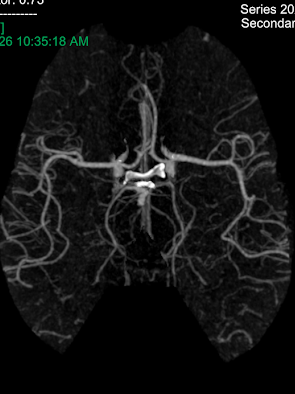
Our brains are built to learn from repetition and experience. Automaticity is useful. We would be exhausted if we had to consciously decide every tiny thing we do all day long.
But our brains aren’t sitting back there making moral judgments about whether every pattern we’ve practiced is actually good for us.
A familiar pattern is familiar.
Which is convenient until the saved setting is procrastination, avoidance, assuming the worst, or telling yourself you’re definitely going to start Monday.
Again.
The good news is that our brains remain capable of learning and adapting.
Neuroplasticity is the brain’s ability to change in response to experience and learning.
That does NOT mean I can think three positive thoughts and have a freshly remodeled brain by Friday.
Let’s not get carried away.
It does mean that “this response feels automatic” and “this response can never change” are not the same statement.
And changing an established response can take real effort.
There’s another concept called cognitive flexibility, which is essentially our ability to adjust our thinking or behavior as circumstances change rather than continuing to use the same response.
So apparently there is actual neuroscience behind why my brain acts personally offended when I suggest we do something differently.
Good to know.
Because the familiar response can be incredibly convincing.
Don’t make the call.
Start tomorrow.
Don’t apply. You probably aren’t qualified anyway.
Don’t say anything. It’ll be awkward.
Don’t try. What if you’re terrible at it?
Just keep doing what you’ve been doing.
And here’s the mildly irritating part of realizing you have choices:
You can no longer pretend you don’t have choices.
Well, shit.
There goes that excuse.
Now, that doesn’t mean every choice is completely within our control. We don’t choose every thought that pops into our heads. We don’t choose our circumstances, our histories, our nervous systems, or every obstacle sitting in front of us.
But there are moments when we can catch the pattern.
And I think that matters.
Because maybe breaking a pattern isn’t one enormous act of transformation.
Maybe it’s catching yourself somewhere inside:
Thought.
Choice.
Behavior.
Repeat.
...and introducing something different.
That’s where I’ve landed on my Rule of Three.
I like three.
Three feels manageable.
Three does not feel like I’ve entered into a legally binding contract with my future self.
If I try a new food, give it three bites.
If I start a book, give it three chapters.
If I think I can’t solve a problem, find three possibilities before I close the door.
If I don’t know how to do something, find three ways I could learn.
If I’m afraid to make a move, make three small ones.
If my immediate thought is I can’t, ask three questions:
Is that actually true?
Is it that I can’t do it, or that I can’t do it the way I originally pictured it?
What’s another way?
And if I’m trying to build a new habit, three tries probably aren’t going to make anything automatic.
Neither will three weeks necessarily.
One of the studies I found while going down this rabbit hole followed people as they tried to build real-world habits. Phillippa Lally and her colleagues found enormous variation in how long it took behaviors to approach automaticity. Their modeled median was 66 days, with individual estimates ranging from 18 to 254 days.
Even more interesting to me?
Missing one opportunity didn’t materially derail the habit-forming process.
Which I love, because apparently even science thinks I need to stop declaring the whole thing a failure after four days.
So maybe three weeks just earns another three.
The Rule of Three isn’t neuroscience.
Three is not some magical number where my basal ganglia throw confetti and hand me an achievement badge.
It’s my pattern interrupter.
My brain says:
I can’t.
Okay.
Before I accept that, give me three other possibilities.
My brain says:
Quit.
Fine.
Give it three honest tries first.
My brain says:
There’s no way.
Okay.
Look for three doors.
Because the point isn’t to force every door open.
Sometimes the door really is locked.
Sometimes the answer really is no.
Sometimes you try three ways and none of them work.
Sometimes you discover you genuinely hate the book, the food, the 5 a.m. workout, the hobby, the job, or whatever bright idea convinced you this was going to change your life.
Fine.
At least this time, you chose.
You didn’t let the old pattern choose for you.
And THAT is what I keep coming back to.
If we can practice avoidance, maybe we can practice curiosity.
If we can practice I can’t, maybe we can practice How could I?
If we can become really good at spotting the problem, maybe we can practice looking for another solution.
If we can build patterns around what’s familiar and comfortable, maybe we can start building some around choosing the uncomfortable thing too.
Not perfectly.
Not every time.
Just often enough to interrupt ourselves.
Because maybe changing the direction of a life doesn’t begin with some massive reinvention of who we are.
Maybe it happens in tiny moments when the old thought shows up, the familiar door starts to close, and we recognize the pattern before it finishes.
Wait.
I know this one.
This is what I always do here.
And then we choose something different.
Once.
Then again.
Then again.
I have no idea how many different choices it takes to change the direction of a life.
But before I let an old pattern make the decision for me?
I’m going to give it three.


Comments